Is Fedora an upstream testing platform for RHEL?

I thought RHEL is upstream of Fedora, how can Fedora be an upstream testing platform then? Its also inconsistent with the visualization of the other distributions and families, as SLES is supposed to be upstream for openSUSE, which also makes more sense with the visualization.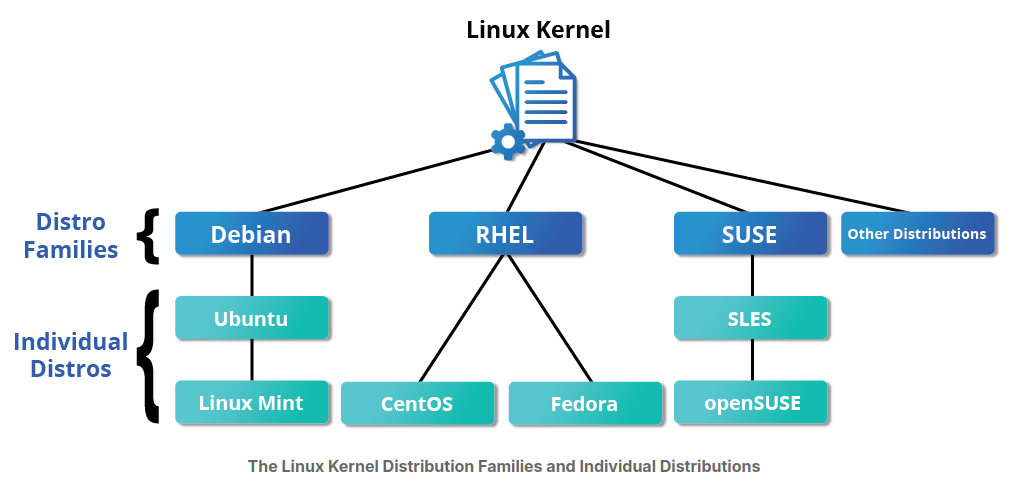


Answers
-
Fedora is upstream from RHEL. OpenSuse is upstream from SLES. When we talk about being upstream, we are referring to software features and development. Red Hat uses Fedora to try new features before they get put into a future release of RHEL. The same applies to OpenSUSE and SLES. Certain features in a Fedora release may or may not be found in a future RHEL release. Fedora is considered a "bleeding edge" release for RHEL. Unless you know what you are doing, we don't recommend people new to Linux run Fedora. Sometimes Fedore may be unstable--an environment you probably should not be learning Linux with. OpenSuse is not typically as experimental as Fedora is, but new features will find their way into OpenSuse that may or may not find their way into SLES. Note that these new features may also come and go from these upstream releases. This is what we mean by "upstream."
The diagram at the beginning of your note is showing how various Linux distributions (Distros) are related. Fedora and CentOS, for example, are Red Hat distributions; software packages are of the "rpm" format. Ubuntu and Mint are Debian distributions. Sorry that this was confusing but thank you for asking about this so we could clarify.
0 -
Thank you for your answer, as this clears things up. I did understand it the way you described initially. But i got confused with the word upstream in the questionaire, because the course states (in the 3rd picture i attached) that SLES is upstream for openSUSE. And that made me confused about which way is up in the diagram.
What you say makes more sense, but means there is an error in the course material that leads to confusion. Maybe someone from the LF can fix that for future course takers.0 -
You are correct in questioning this. I made a mistake in my answer; it is not quite complete. There are technically two versions of OpenSUSE: OpenSUSE Tumbleweed and OpenSUSE LEAP. SLES is upstream to OpenSUSE LEAP and not the other way around. OpenSUSE LEAP is based on the current version of SLES. So, SLES is upstream to OpenSUSE LEAP. However, OpenSUSE Tumbleweed incorporates "rolling" (like a tumbleweed) releases. It gets updated frequently with new things from the community. Some of those things will get put into future releases of SLES (and some won't). OpenSUSE Tumbleweed is upstream to SLES. OpenSUSE LEAP is what most people call OpenSUSE (and it was the only version of OpenSUSE a few years ago). So, the course material is correct that SLES is upstream to what most people in the SUSE community think of as OpenSUSE, that is OpenSUSE LEAP.
I'm sorry for my mistake but thank you for pointing this out. I think I should probably update this in the material. I was trying to keep it simple, but I don't think I can.
0


Categories
- All Categories
- 164 LFX Mentorship
- 164 LFX Mentorship: Linux Kernel
- 726 Linux Foundation IT Professional Programs
- 368 Cloud Engineer IT Professional Program
- 162 Advanced Cloud Engineer IT Professional Program
- 69 DevOps IT Professional Program - Discontinued
- 2 DevOps & GitOps IT Professional Program
- 94 Cloud Native Developer IT Professional Program
- 33 Express Training Courses & Microlearning
- 31 Express Courses - Discussion Forum
- 2 Microlearning - Discussion Forum
- 7.4K Training Courses
- 25 LFC110 Class Forum - Discontinued
- 15 LFC131 Class Forum - DISCONTINUED
- 54 LFD102 Class Forum
- 254 LFD103 Class Forum
- 1 LFD103-JP クラス フォーラム
- 17 LFD110 Class Forum
- LFD114 Class Forum
- 54 LFD121 Class Forum
- 3 LFD123 Class Forum
- 2 LFD125 Class Forum
- 3 LFD133 Class Forum
- 4 LFD134 Class Forum
- 4 LFD137 Class Forum
- 1 LFD140 Class Forum
- 66 LFD201 Class Forum
- 7 LFD210 Class Forum
- 3 LFD210-CN Class Forum
- 1 LFD213 Class Forum - Discontinued
- 1 LFD221 Class Forum
- 127 LFD232 Class Forum - Discontinued
- 2 LFD233 Class Forum - Discontinued
- 4 LFD237 Class Forum
- 24 LFD254 Class Forum
- 759 LFD259 Class Forum
- 110 LFD272 Class Forum - Discontinued
- 2 LFD272-JP クラス フォーラム - Discontinued
- 22 LFD273 Class Forum
- 660 LFS101 Class Forum
- 4 LFS111 Class Forum - Discontinued
- 2 LFS112 Class Forum
- LFS114 Class Forum
- 4 LFS116 Class Forum
- 6 LFS118 Class Forum
- 2 LFS120 Class Forum
- 1 LFS140 Class Forum
- 11 LFS142 Class Forum
- 9 LFS144 Class Forum
- 5 LFS145 Class Forum
- 6 LFS146 Class Forum
- 7 LFS147 Class Forum
- 26 LFS148 Class Forum
- 22 LFS151 Class Forum - Discontinued
- 4 LFS157 Class Forum
- 167 LFS158 Class Forum
- 1 LFS158-JP クラス フォーラム
- 17 LFS162 Class Forum
- 1 LFS166 Class Forum - Discontinued
- 8 LFS167 Class Forum
- 4 LFS170 Class Forum
- 1 LFS171 Class Forum - Discontinued
- 3 LFS178 Class Forum - Discontinued
- 3 LFS180 Class Forum
- 2 LFS182 Class Forum
- 6 LFS183 Class Forum
- 2 LFS184 Class Forum
- 42 LFS200 Class Forum
- 736 LFS201 Class Forum - Discontinued
- 2 LFS201-JP クラス フォーラム - Discontinued
- 23 LFS203 Class Forum
- 151 LFS207 Class Forum
- 2 LFS207-DE-Klassenforum
- 3 LFS207-JP クラス フォーラム
- 301 LFS211 Class Forum - Discontinued
- 55 LFS216 Class Forum - Discontinued
- 60 LFS241 Class Forum
- 51 LFS242 Class Forum
- 41 LFS243 Class Forum
- 18 LFS244 Class Forum
- 8 LFS245 Class Forum
- 1 LFS246 Class Forum
- 1 LFS248 Class Forum
- 165 LFS250 Class Forum
- 3 LFS250-JP クラス フォーラム
- 2 LFS251 Class Forum - Discontinued
- 164 LFS253 Class Forum
- 1 LFS254 Class Forum - Discontinued
- 3 LFS255 Class Forum
- 18 LFS256 Class Forum
- 2 LFS257 Class Forum
- 1.4K LFS258 Class Forum
- 12 LFS258-JP クラス フォーラム
- 149 LFS260 Class Forum
- 164 LFS261 Class Forum
- 45 LFS262 Class Forum
- 82 LFS263 Class Forum - Discontinued
- 15 LFS264 Class Forum - Discontinued
- 11 LFS266 Class Forum - Discontinued
- 25 LFS267 Class Forum
- 27 LFS268 Class Forum
- 38 LFS269 Class Forum
- 10 LFS270 Class Forum
- 202 LFS272 Class Forum - Discontinued
- 2 LFS272-JP クラス フォーラム - Discontinued
- 1 LFS274 Class Forum - Discontinued
- 4 LFS281 Class Forum - Discontinued
- 32 LFW111 Class Forum
- 265 LFW211 Class Forum - Discontinued
- 190 LFW212 Class Forum - Discontinued
- 18 SKF100 Class Forum
- 2 SKF200 Class Forum
- 3 SKF201 Class Forum
- 789 Hardware
- 202 Drivers
- 68 I/O Devices
- 37 Monitors
- 95 Multimedia
- 173 Networking
- 89 Printers & Scanners
- 86 Storage
- 764 Linux Distributions
- 81 Debian
- 67 Fedora
- 20 Linux Mint
- 13 Mageia
- 23 openSUSE
- 150 Red Hat Enterprise
- 31 Slackware
- 13 SUSE Enterprise
- 355 Ubuntu
- 460 Linux System Administration
- 31 Cloud Computing
- 72 Command Line/Scripting
- Github systems admin projects
- 95 Linux Security
- 78 Network Management
- 100 System Management
- 46 Web Management
- 70 Mobile Computing
- 18 Android
- 39 Development
- 1.2K New to Linux
- 1K Getting Started with Linux
- 381 Off Topic
- 117 Introductions
- 174 Small Talk
- 29 Study Material
- 735 Programming and Development
- 309 Kernel Development
- 408 Software Development
- 898 Software
- 291 Applications
- 182 Command Line
- 5 Compiling/Installing
- 68 Games
- 316 Installation
- 62 All In Program
- 62 All In Forum
Upcoming Training
-
August 20, 2018
Kubernetes Administration (LFS458)
-
August 20, 2018
Linux System Administration (LFS301)
-
August 27, 2018
Open Source Virtualization (LFS462)
-
August 27, 2018
Linux Kernel Debugging and Security (LFD440)